How the Red Ferrari Night Held Together
Thirty-five frames of one night in 1979, and the part that actually makes them agree with each other: the cast and the rooms, defined once and wired into every shot that needs them.
Notes from building with FlowBoard: scene planning, reference-driven generation, layout, and the stories the tool gets used to tell.
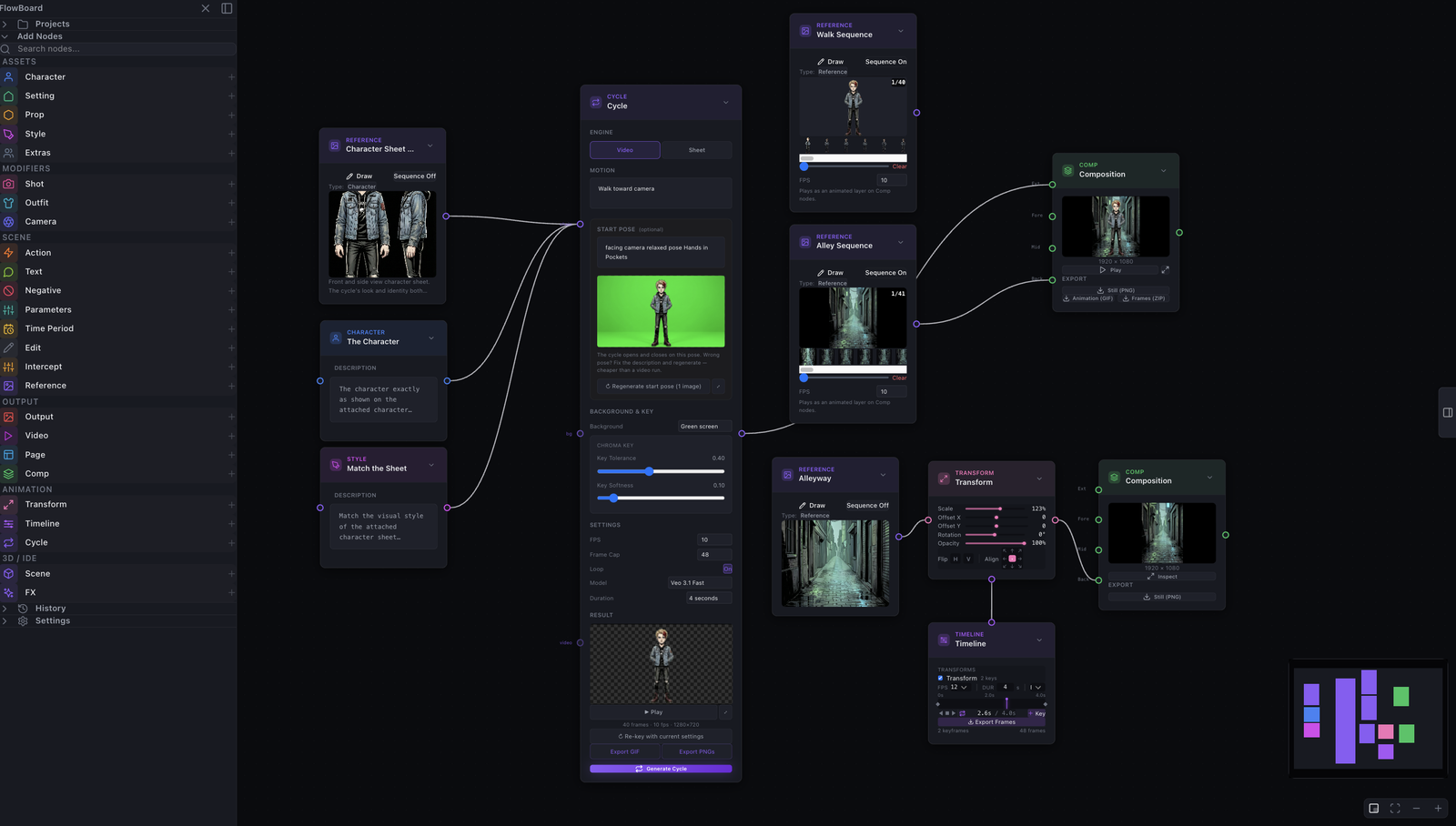
Cheap before expensive as a design rule, a model API that changed under me mid-testing, green light that no tolerance slider could reach, and a GIF encoder that froze the UI. The parts of the Cycle node worth writing down.

Thirty-five frames of one night in 1979, and the part that actually makes them agree with each other: the cast and the rooms, defined once and wired into every shot that needs them.
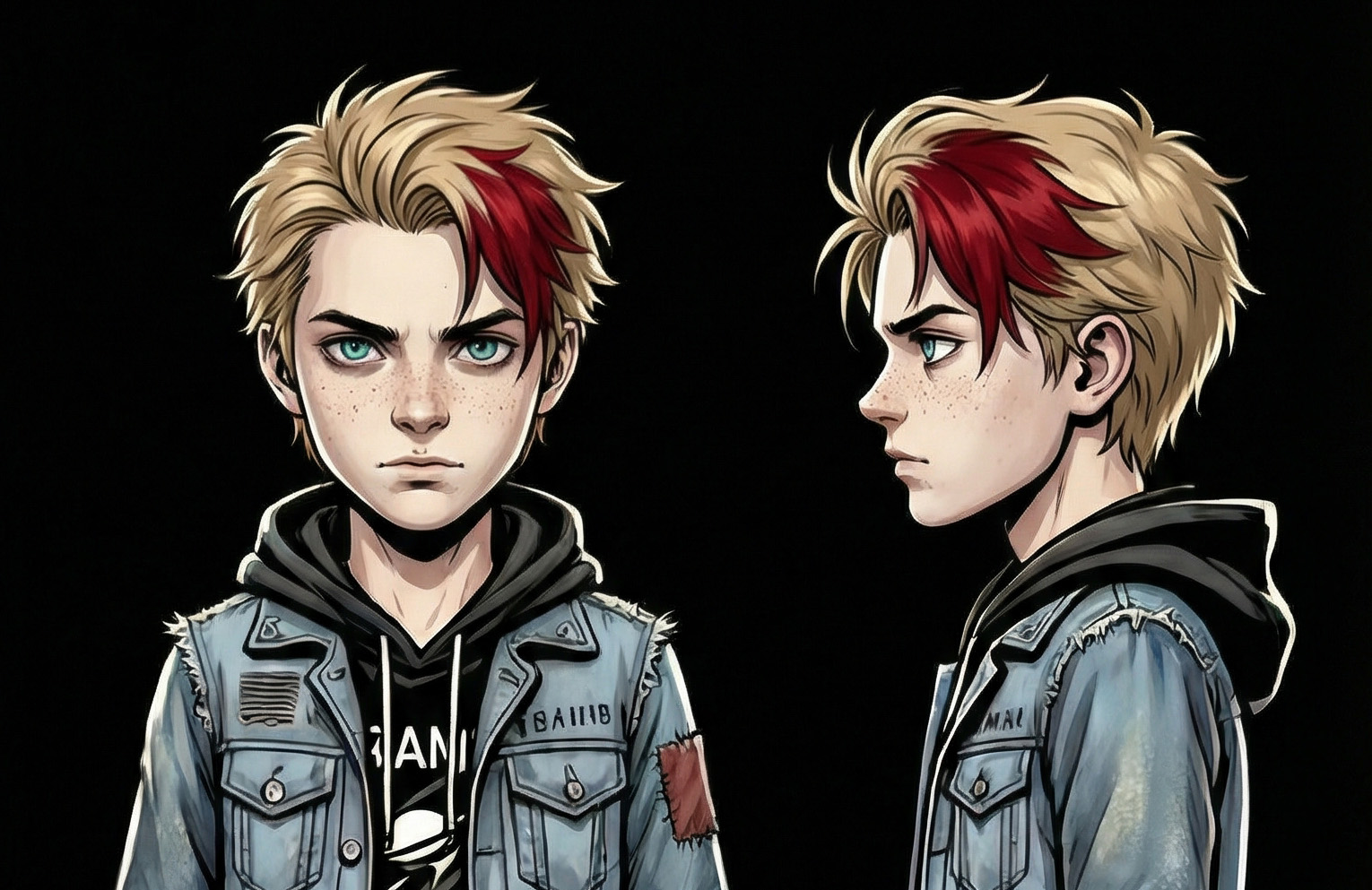
A character sheet is a promise of motion. The Cycle node keeps it: turn a pinned pose into keyed frames, composite them over a background, then hand-pick the twelve that make a true loop.
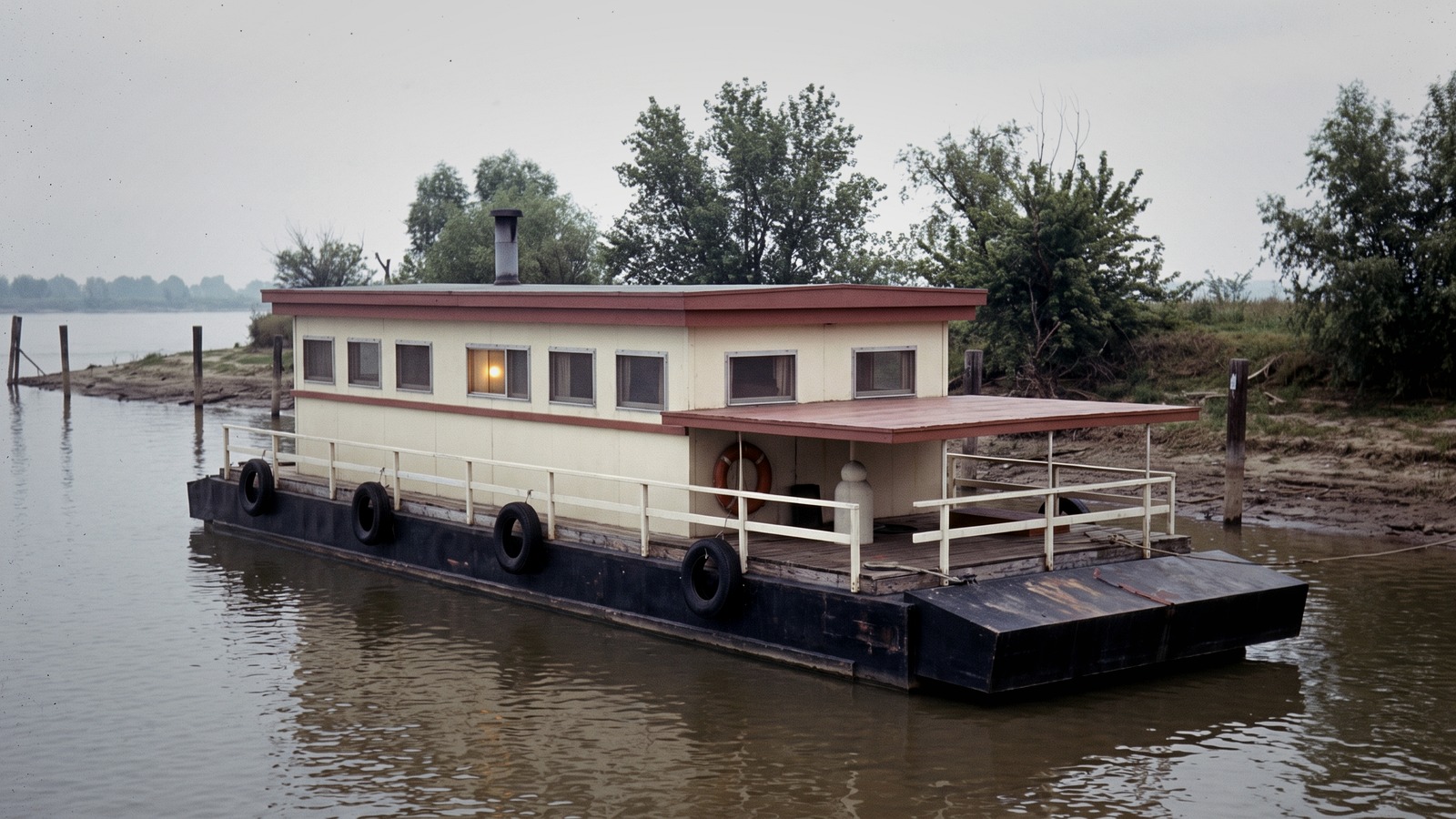
The authenticated FlowBoard dashboard project for the Houseboat demo shows a compact but complete workflow: Scene capture, reference-driven outputs, page layout, and a final refinement pass that keeps composition stable while changing medium.
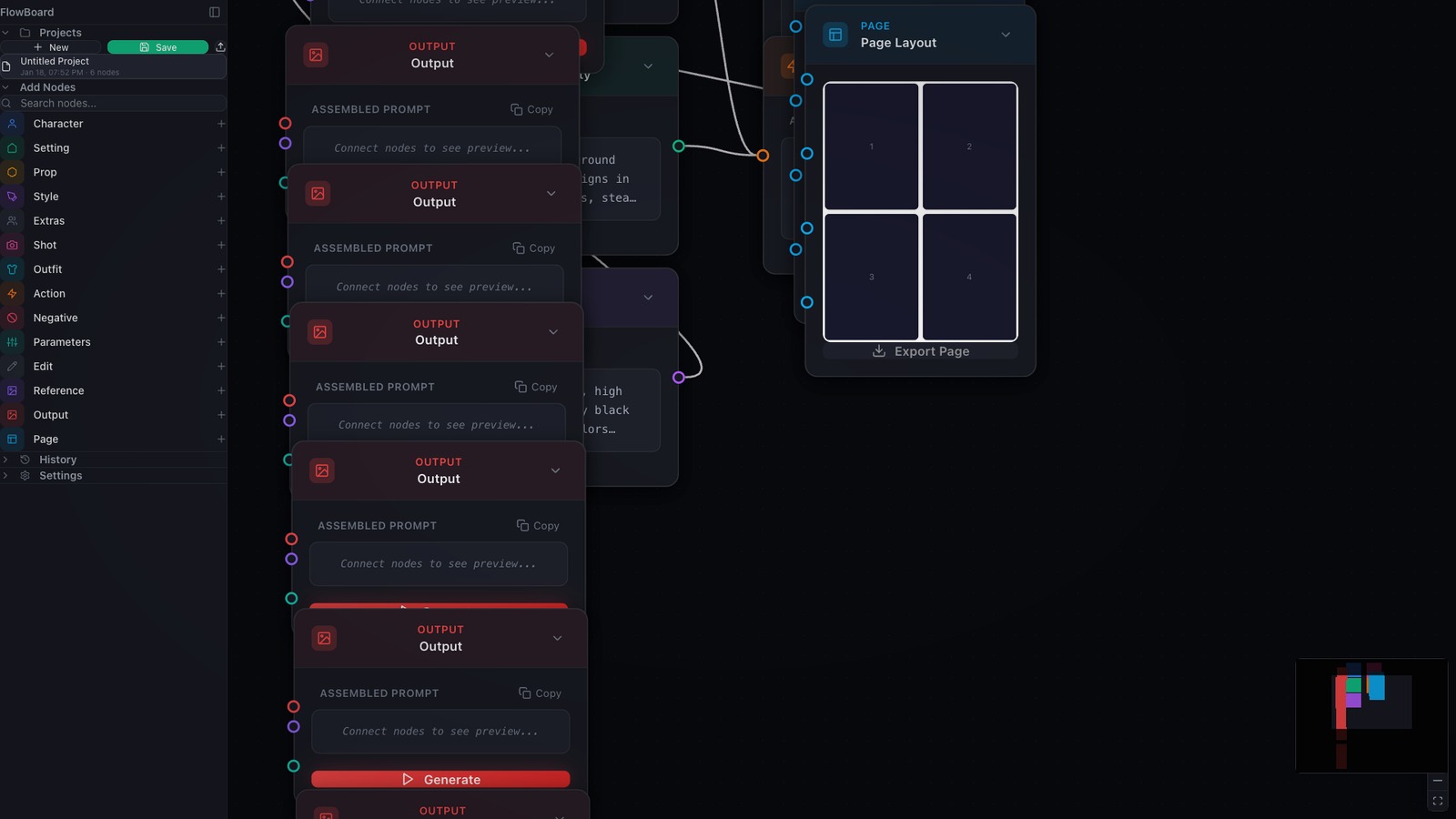
FlowBoard now lets Scene and FX nodes stay in the same graph while switching between the ThreeJS IDE, Blender, and local or manual fallbacks.
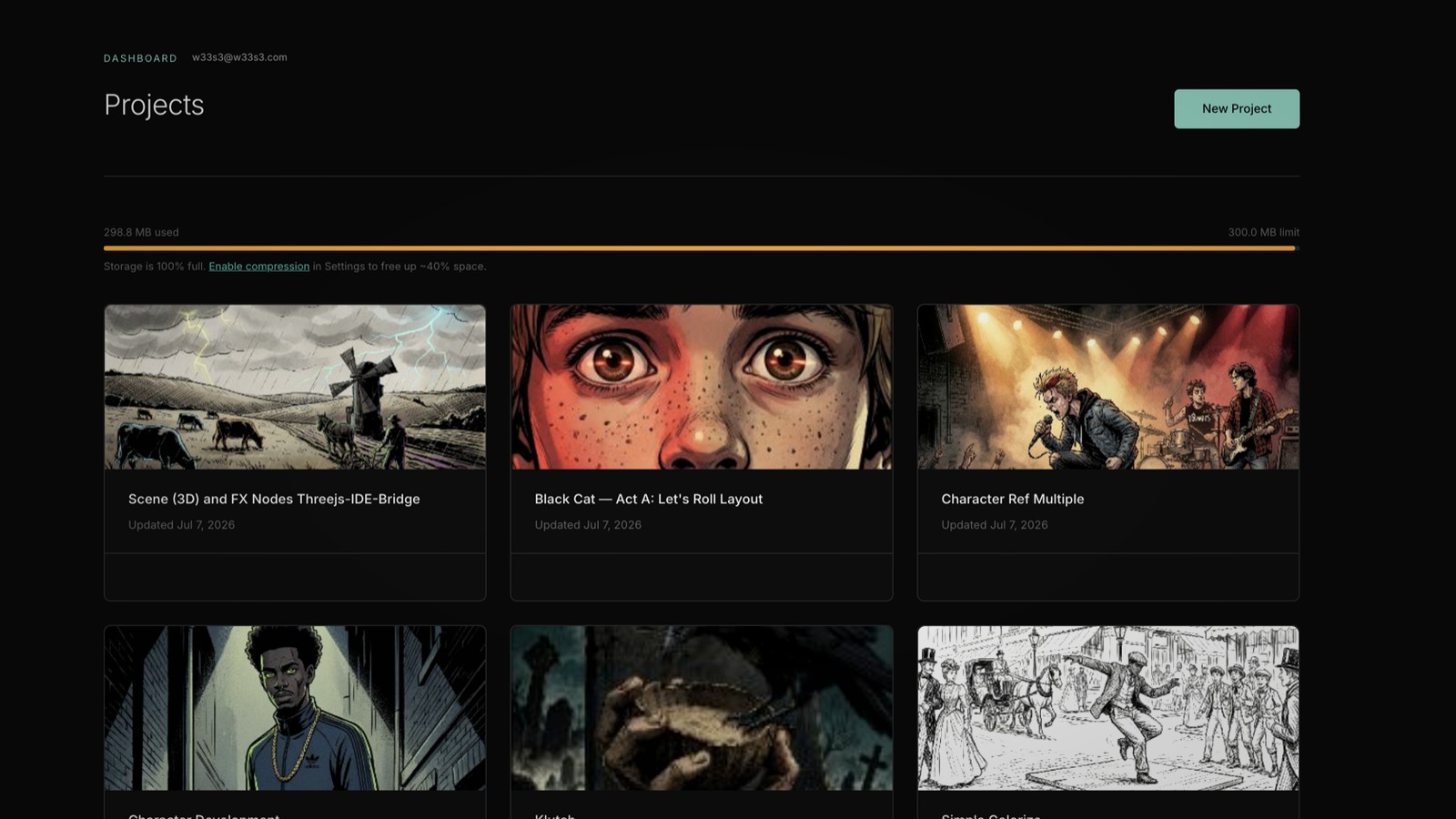
FlowBoard's dashboard now acts more like a product hub, collecting the desktop app, installable skills, the ThreeJS IDE, and the Blender Bridge add-on in one subscriber-facing resources area.
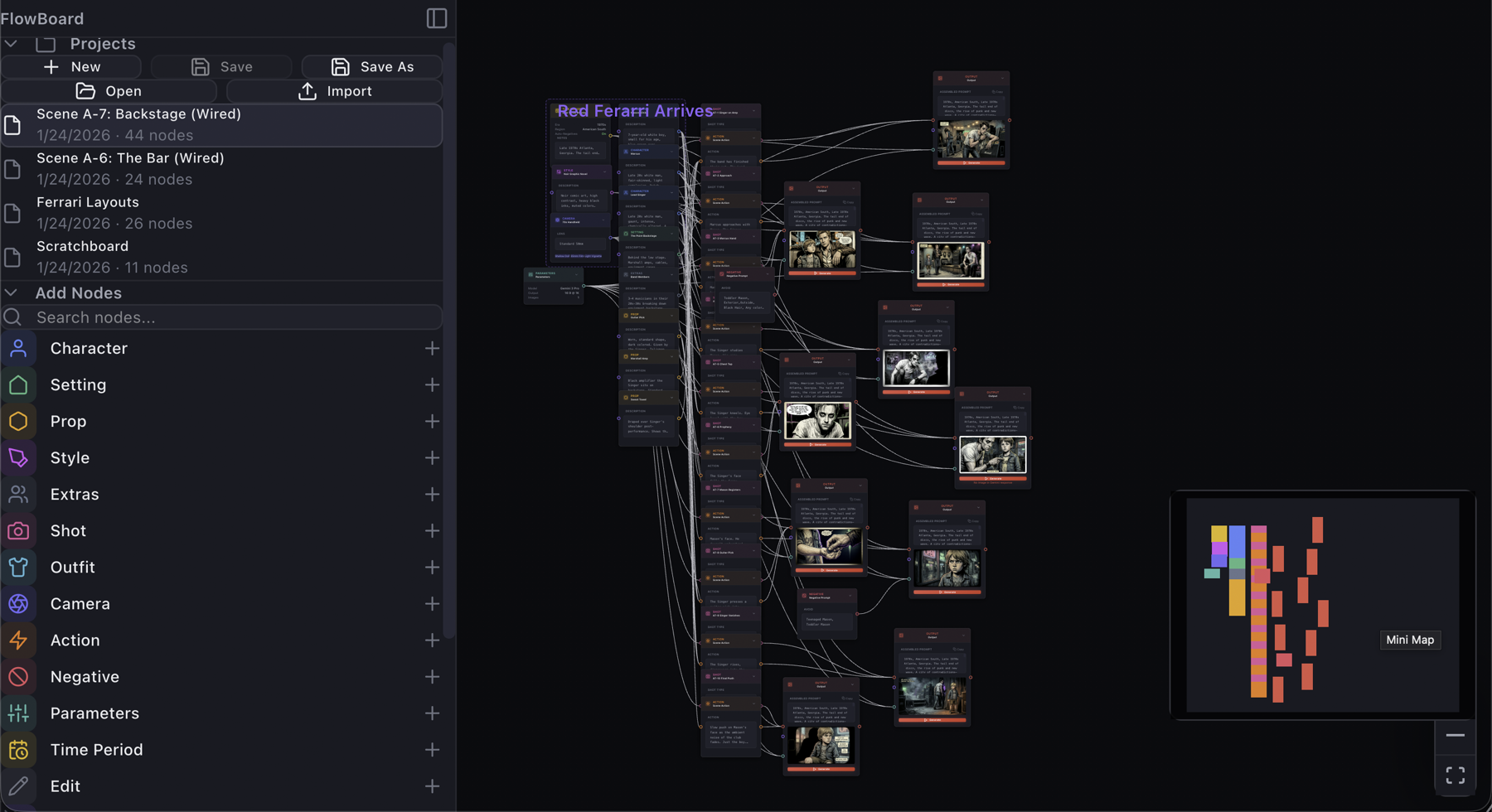
Recent desktop work makes FlowBoard behave less like a wrapped web app and more like a usable local tool, with native project open/save flows, script file I/O, and working asset downloads.
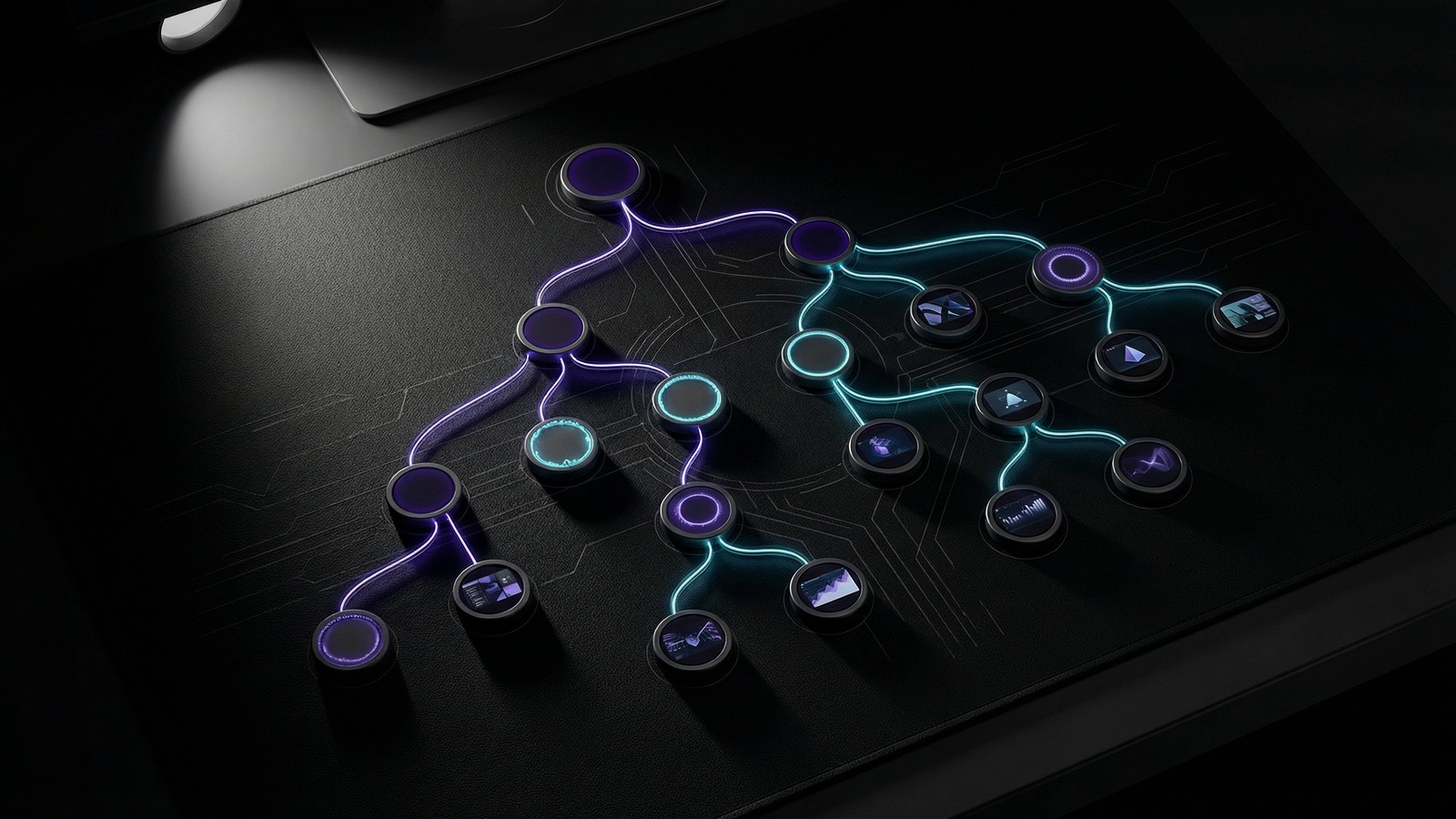
A migrated seed post about turning FlowBoard workflows into reference-aware scene plans instead of isolated prompt fragments.