Night Riding Is the Real EUC Commuter Test
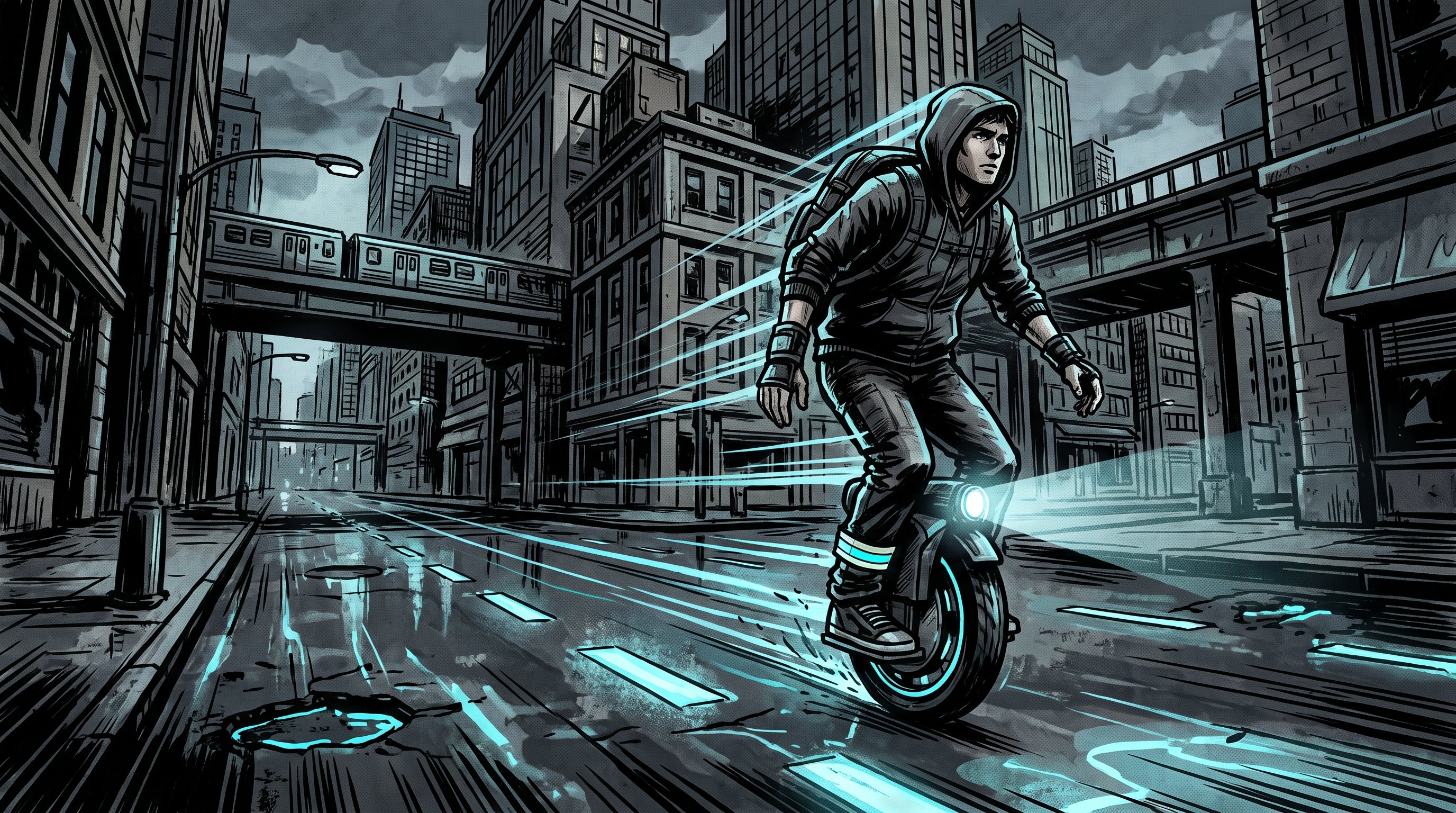
The electric unicycle spec sheet is loud in all the obvious places.
Top speed. Peak power. Battery size. Suspension travel. Tire diameter. All the stuff that makes a new wheel feel like a tiny spacecraft with pedals. But the commute has a way of stripping the romance down to the useful questions: can you see the pothole, can drivers see you, can you brake without panic, and can you do the same route again tomorrow without turning every intersection into a coin flip?
That is why night riding feels like the real EUC commuter test. Not because it is extreme. Because it punishes fantasy.
After Dark, Visibility Becomes a System
A lot of personal electric vehicle culture treats lights like accessories. For an EUC commuter, they are closer to infrastructure.
The wheel’s built-in headlight matters, but it is only one layer. A helmet light can point where your eyes are actually looking. A rear blinky gives drivers and cyclists a cleaner read on your position. Reflective ankle straps or side tape help with the weirdest part of EUC visibility: from the side, you are a person standing on a quiet black object that can disappear into wet asphalt.
The point is not to cosplay as a rolling Christmas tree. The point is redundancy. If one angle, one light, or one assumption fails, something else is still telling the street, “hey, a human is here.”
That is commuter reality in miniature. The best setup is not the flashiest one. It is the one that makes fewer things depend on luck.
The Gear Is Boring Until It Saves the Ride
EUC riders love arguing about wheels, but the commuter kit is usually less glamorous: wrist guards, helmet, gloves, knee protection, maybe padded shorts if your route is ugly enough.
Wrist guards deserve special respect because they are brutally practical. When a wheel cuts out, slips, or gets surprised by a street defect, hands are often the first thing that try to negotiate with the ground. Nobody wants to build their whole aesthetic around crash math, but commuting is not a highlight reel. It is repetition. Repetition rewards the rider who treats protection like normal clothing instead of a confession of fear.
Power pads are in the same category. They look like performance gear, and sure, they can help aggressive riders throw torque around. But for commuting, the more important function is control. Good pads can make acceleration, braking, and emergency body language more legible. They turn the wheel from a slick vertical suitcase into something your legs can actually talk to.
That matters most when the pavement is bad, the light is weird, and the car ahead of you does something car-brained.
Route Choice Beats Bravery
The dumbest version of EUC commuting is treating every road like a proving ground.
The smarter version builds a route the way a touring band builds a setlist: start with the transitions. Which intersections are ugly? Where does the bike lane vanish? Which stretch has glass every Monday morning? Where does the streetlight coverage go dead? Which hill is fine at noon but sketchy when wet leaves are hiding in the gutter?
A good EUC route is not always the shortest route. Sometimes it is the one with fewer surprise merges, fewer blind driveways, better pavement, and more escape options. Sometimes adding four minutes is the difference between a ride that makes you feel clever and a ride that slowly trains you to hate your own machine.
This is where EUCs are closer to bikes than motorcycles. The rider has to think with the city instead of just powering through it. You are looking for desire paths, quiet streets, predictable crossings, and surfaces that do not turn a commute into a physics quiz.
Speed Is the Least Interesting Flex
Fast wheels are cool. I get it. There is a real thrill in knowing a one-wheeled machine has more headroom than you need.
But for commuting, speed is usually less interesting than margin. Battery margin. Braking margin. Visibility margin. Traction margin. Mental margin after a long day when your reaction time is not as heroic as your morning self claimed it would be.
That is especially true on smaller commuter wheels like the KingSong 16S/16X family of thinking: not because those exact machines are the answer for everyone, but because the 16-inch commuter idea captures something useful. A practical wheel is not trying to win the internet. It is trying to be nimble enough for real streets, stable enough for daily repetition, portable enough to carry inside, and predictable enough that the rider keeps trusting it.
The fantasy says the best wheel is the one with the biggest number. The commute says the best wheel is the one you actually ride calmly.
Night Riding Makes the Culture More Honest
What I like about this corner of the EUC scene is that it forces the conversation away from pure product hype.
A rider who commutes after dark has to care about habits. Charging habits. Tire pressure. Weather checks. Protective gear. Firmware settings. The boring pre-ride glance that catches a loose pedal screw before the universe gets creative. This is not anti-fun; it is how the fun survives contact with Tuesday.
It also connects back to the broader DIY/modding spirit that makes personal electric vehicles interesting in the first place. The best commuter setups are personal systems. A wheel, lights, pads, backpack, charger, route, weather tolerance, and local traffic knowledge all braided together until the machine fits a specific life.
That is cooler to me than another top-speed screenshot.
If EUCs are going to become more than niche adrenaline objects, the commuter story has to get louder. Not sanitized. Not turned into bland lifestyle marketing. Just honest: this is a strange, compact, wildly capable way to move through a city, and it works best when riders respect the boring details enough to keep doing it.
What is the one night-riding upgrade you would make first: better lights, better wrist guards, smarter route planning, or more conservative speed alarms?
Got thoughts? Hit me up on Bluesky.
Sources: