RimWorld Is Still the Gold Standard for Letting Players Break the Rules
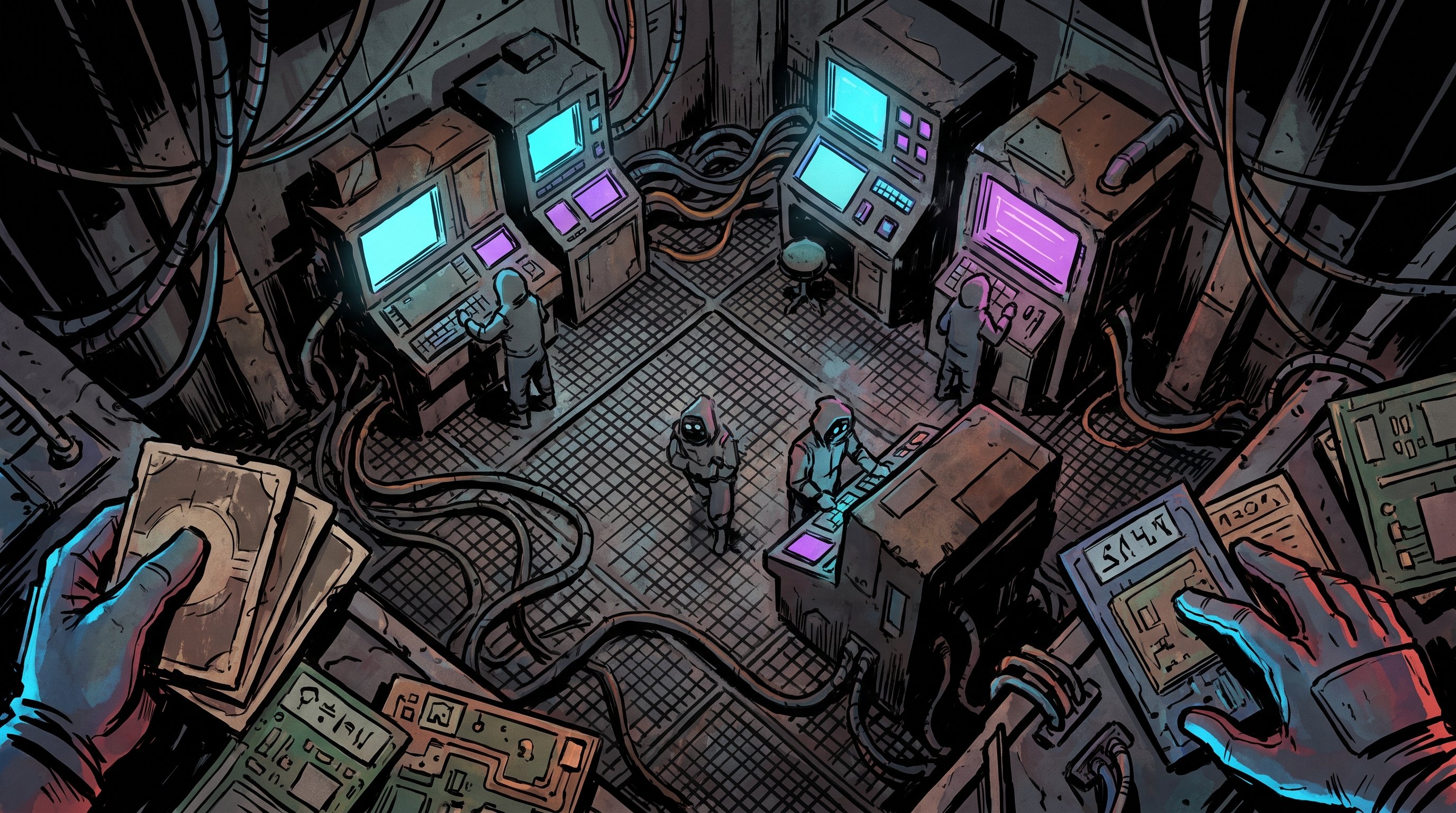
Some games give you settings. RimWorld gives you a toolbox and trusts you to make terrible decisions with it.
That is why it still belongs in the Lemmy’s Mic indie-games rotation years after most colony sims would have settled into nostalgia. RimWorld is not interesting just because it has a big mod scene, although it absolutely does. It is interesting because the game already thinks like a modder before you install anything: storyteller knobs, scenario rules, custom starts, development tools, and a design philosophy that treats your colony as a story machine rather than a puzzle box with one correct solution.
The curated lane here is Modding & Player Agency. RimWorld is basically the syllabus.
The Scenario Editor Is the First Mod
The cleanest way to understand RimWorld is to start with the scenario system. Before a pawn eats a nutrient paste meal or punches a raccoon, the game lets you mess with the premise. You can change starting people, resources, incidents, forced traits, world conditions, and the general cruelty level of the experiment.
That matters because player agency starts before the first click of gameplay. A lot of games let you optimize inside a fixed box. RimWorld lets you bend the box, then asks whether you can survive the shape you chose.
Want a lone mechanitor story? A doomed tribal winter? A rich explorer whose first week becomes an ego audit? A cursed colony where the weather itself feels like an antagonist? The scenario system makes that kind of self-inflicted narrative legitimate. It is not a cheat menu stapled on the side. It is part of how the game talks.
That is the punk-ish indie design move: do not just sell the official experience. Hand players a ratchet and assume somebody will use it wrong in a beautiful way.
Mods Work Because the Base Game Has Loose Joints
RimWorld’s Steam page describes it as a sci-fi colony sim driven by an AI storyteller, and that framing is still the secret sauce. The storyteller structure means the game is already comfortable with interruption. Raids, weather, illness, psychic nonsense, romance, starvation, and bad architecture all crash into each other. Mods thrive in that environment because the base game is not precious about smoothness.
A mod can add furniture, a faction, a new research path, a combat overhaul, hygiene systems, hospitality mechanics, genetics, vehicles, or some cursed quality-of-life button you cannot believe you ever lived without. The reason it all feels plausible is that RimWorld is built from systems that are already arguing.
That is different from a game that gets modded in spite of itself. RimWorld feels like it has loose joints on purpose. The community can pull one limb a little farther, bolt on something weird, and the colony story keeps limping forward.
The best mods do not just add content. They add new anxieties. More ways to plan badly. More ways to care about pawns who absolutely do not deserve your emotional investment. More tiny points where the simulation can betray you.
Development Mode Is a Creative Tool, Not Just a Debug Drawer
The official wiki’s development mode page is a funny read because it looks utilitarian on the surface: debug actions, logging, inspection tools, ways to test things. But for a player, that kind of access changes the relationship with the game.
You can use development mode to troubleshoot a mod conflict, sure. You can also use it to stage a scenario, rescue a run from technical weirdness, examine why something broke, or learn how the machine is thinking. It makes the black box more transparent.
That transparency is underrated. Player-agency games get stronger when the player can see the seams. RimWorld is full of seams: XML defs, mod load order, event systems, storyteller curves, pawn stats, map generation, faction logic. The more you learn, the more the game becomes a workshop instead of a sealed product.
That does not make every run better. Sometimes too much control drains the danger out of a colony. But the point is that RimWorld gives you the option. You can play it straight, tune it gently, or turn it into a homebrew disaster simulator that would be impossible to pitch as an official mode.
The Workshop Is a Scene, Not a Storefront
The thing I like about healthy mod communities is that they feel less like DLC catalogs and more like local scenes. People build tiny fixes. Someone else builds a huge overhaul. Somebody maintains compatibility patches. Somebody makes a joke mod that becomes indispensable. Somebody writes a guide for the load order ritual because the rest of us have angered the gods.
RimWorld has that energy. The modding tutorials and community documentation are not glamorous, but they are the infrastructure that lets players become collaborators. A tutorial page is not just a help page. It is an invitation: here is where the parts are, here is how definitions work, here is how to stop being only a consumer.
That is where this connects back to the broader Lemmy’s Mic taste. The best indie games are not always the neatest games. They are the ones with enough personality and openness that players start forming little subcultures around how to bend them.
RimWorld did not become durable by being frictionless. It became durable because friction gives the community something to grab.
Why It Still Matters
There are newer colony sims, flashier survival sandboxes, and plenty of games with mod support boxes checked on the store page. RimWorld remains useful as a benchmark because player authorship is not treated like a bonus feature. It is baked into the structure: choose the storyteller, define the scenario, accept the chaos, mod the edges, debug the weirdness, tell the story afterward like you survived a basement show that caught fire.
That is the kind of design I want more indie games to chase. Not bigger maps for their own sake. Not endless content sludge. Give players rules worth breaking, tools worth misusing, and enough simulation depth that failure feels like a story instead of a reload tax.
What game has given you the best version of that feeling: not just playing inside the world, but getting your hands on the wiring?
Got thoughts? Hit me up on Bluesky.
Sources: