Open Controllers Made E-Bike Modding Weird Again
The most interesting e-bike conversations rarely start with a spec sheet.
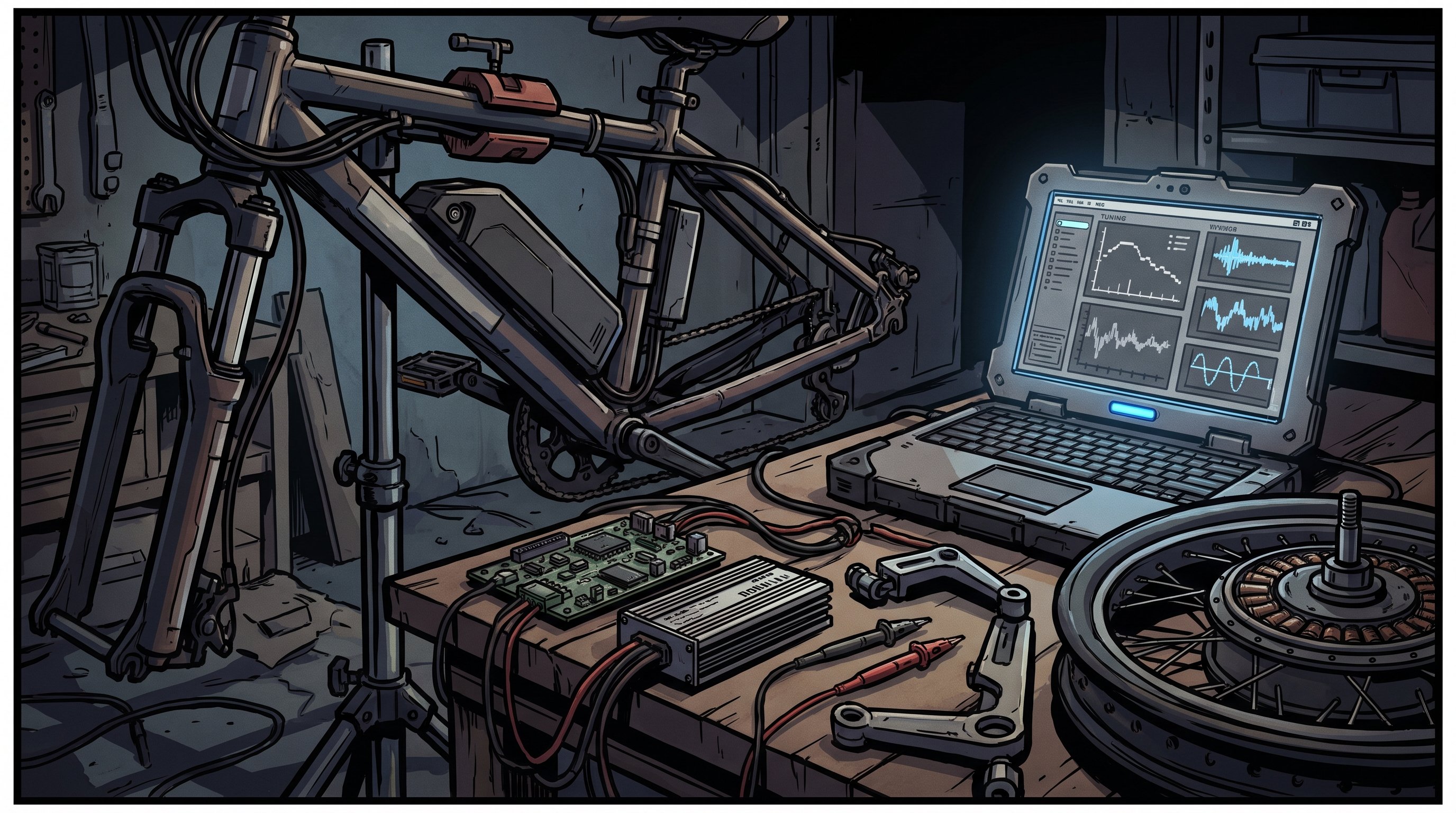
They start with somebody staring at a tangle of phase wires, wondering whether the stock controller is the boring part. That is where the DIY side of the scene still feels alive: not in another glossy commuter render, but in the garage logic of what happens if I can actually tune this thing?
For the Lemmy’s Mic e-bike lane, open controllers and dashboard brains hit the sweet spot. They are not products in the normal review-cycle sense. They are permission structures. They let riders, builders, and forum goblins treat an electric bike less like a finished appliance and more like a system with arguments still open.
The Controller Is Where the Bike Gets a Personality
A motor can be powerful. A battery can be huge. But the controller is where all that potential gets translated into behavior.
That is why open controller culture matters. The VESC Project describes itself around open-source motor control software and hardware, originally born in the skate/electric vehicle world and now spread into all kinds of personal electric machines. The important part is not just that it can make a motor spin. Stock controllers do that. The important part is that it invites adjustment: throttle response, current limits, braking feel, thermal behavior, sensor choices, and all the weird edge cases that make a build feel either dialed or cursed.
A sealed controller says, “Trust us.” An open controller says, “Here are the knobs. Try not to vaporize anything.”
That second sentence is where the fun lives.
DIY E-Bikes Are More Interesting When They Are Tuneable
There is a version of e-bike culture that wants every machine to disappear into consumer calm: hidden battery, quiet hub, phone app, warranty-safe behavior, no questions asked.
That is fine for a lot of commuters. Honestly, it is probably what the average person needs. But it is not where the punk-DIY energy is.
The DIY/modding side is different because it accepts that a rider may want torque over top speed, or hill climbing over range, or regenerative braking that feels natural instead of ornamental. One person is building a cargo hauler. Another is resurrecting an old steel frame. Someone else is trying to make a hub motor behave less like an on/off appliance and more like an instrument.
That kind of customization is not just hot-rodding. Sometimes it is accessibility. Sometimes it is repairability. Sometimes it is a refusal to throw away a perfectly good frame because the market decided this year’s integrated battery shape is the only acceptable future.
Dashboards Changed the Conversation Too
The other half of the story is measurement.
Grin’s Cycle Analyst has been around the DIY scene for years because it gives builders a way to see and manage what the system is doing: speed, voltage, current, watt-hours, limits, and behavior that would otherwise stay invisible. That matters because tuning without feedback is just superstition with better connectors.
Once a bike tells you what it is consuming, how hard it is pulling, and where the limits are, the build becomes a conversation. You can stop arguing in vibes and start adjusting in evidence.
That is why tools like this pair so naturally with open controllers. One gives you control. The other gives you accountability. Together they make the e-bike feel less like a black box and more like a workshop project that can get smarter over time.
The Forum Brain Still Matters
This is also why places like Endless Sphere remain culturally important, even when the modern web keeps trying to drag every niche community into a disappearing social feed.
A forum thread can be messy, old, opinionated, and full of people arguing about things that look insane to outsiders. It can also preserve the exact kind of slow knowledge that keeps DIY scenes alive: controller settings, battery mistakes, torque arm warnings, charger recommendations, phase wire mysteries, and the hard-won lesson that maybe your first plan was spicy in the bad way.
Open hardware and firmware need that social layer. The files and boards are only half the story. The other half is the builder who documents what failed, the commuter who reports what worked in rain, and the veteran who tells a newcomer to add a real torque arm before physics edits the dropout.
That is not glamorous, but it is the culture.
The Risk Is Real, Which Is Why the Culture Matters
There is a reason DIY e-bike modding can make people nervous. Batteries are not magic bricks. Controllers are not toys. A hacked-together high-power build with bad charging habits and no mechanical respect is not rebellion; it is a rolling lesson in why standards exist.
But the answer cannot be to pretend all modification is irresponsible. The healthier path is better literacy: understanding current, heat, cells, fusing, connectors, braking, torque arms, and the difference between a thoughtful build and a sketchy one.
The best open-controller culture does not remove risk. It makes the system legible enough that responsible builders can manage it.
That is the line I keep coming back to. E-bikes get boring when they are treated like sealed lifestyle gadgets. They get dangerous when modification becomes ego without knowledge. But in the middle, there is a deeply cool space where a rider can learn the machine, tune it for real use, repair it instead of replacing it, and share the notes so the next person starts a little less blind.
If the future of small electric transport is going to have any soul, it probably needs more of that: fewer disposable black boxes, more tuneable machines, and more builders willing to document the weird stuff.
What is the first e-bike system you would want real control over: throttle feel, regen braking, torque limits, or the dashboard data itself?
Got thoughts? Hit me up on Bluesky.
Sources: