Kava Menus Are Becoming the Real Third-Space Design Tool
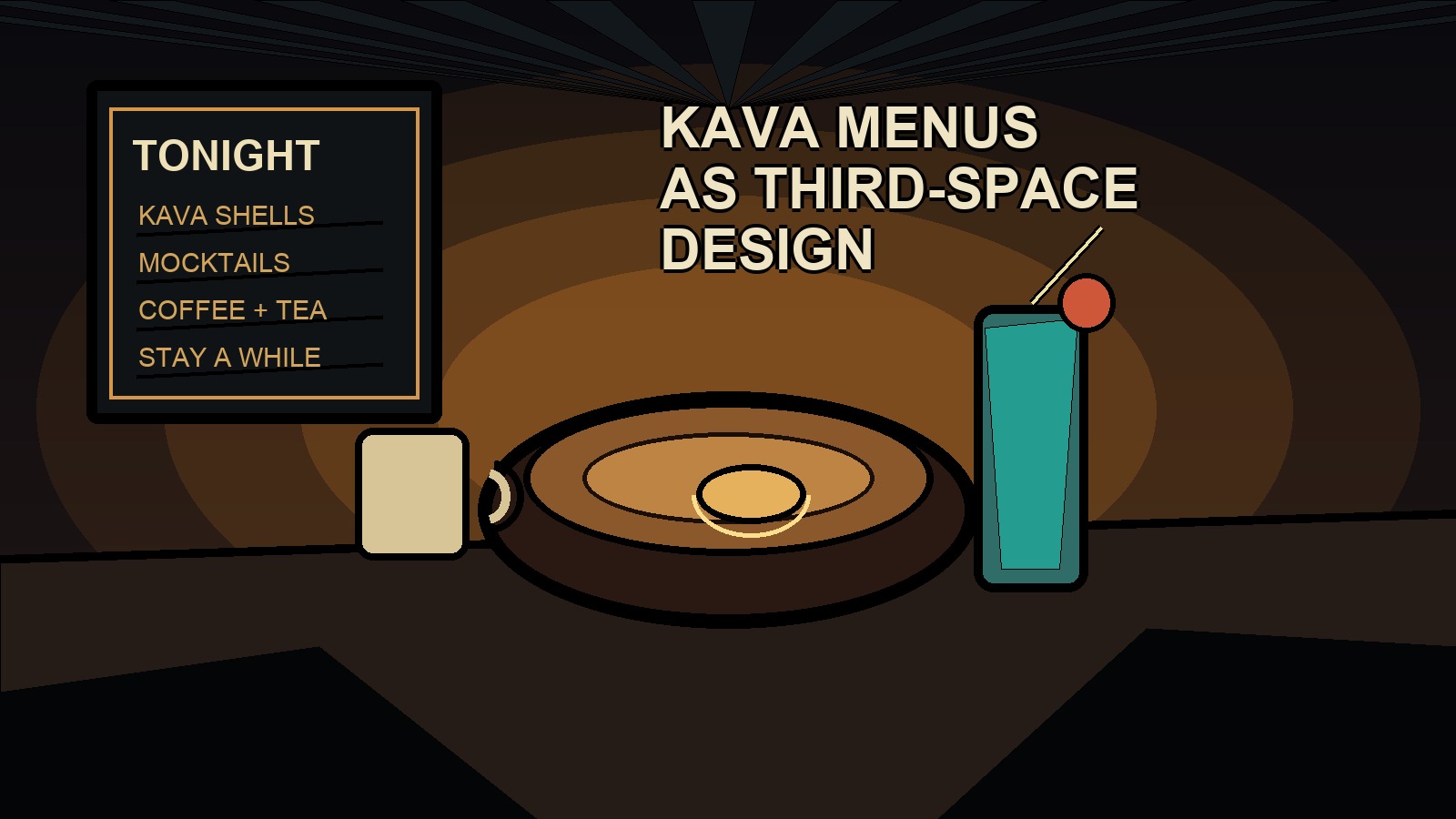
The room gets people curious, but the menu is what tells them whether they belong.
That is the piece of the kava-bar story I keep coming back to. A good kava bar cannot survive on vibes alone. It has to translate something culturally specific, slightly unfamiliar to a lot of American customers, and easy to misunderstand into a night out that feels clear instead of awkward.
That makes the menu more than a list of drinks. It is the onboarding system. It is the social script. It is how a first-timer decides whether they are ordering a traditional shell, a fruit-forward mocktail, coffee, tea, or something blended enough to feel safe while they learn the room.
For the Lemmy’s Mic kava lane, that is where things get interesting: not just which cities are adding kava bars, but how those bars are designing the first five minutes of belonging.
The Shell Is the Signal
Traditional shell service still matters because it gives the bar a center of gravity.
A shell says: this is not just another NA beverage pretending to be a cocktail. There is a ritual here. There is a plant with a long Pacific Island context behind it. There is a slower pace baked into the experience. When a bar keeps that visible, it gives the whole room a reason to feel different from a cafe, a lounge, or a sober sports bar with better lighting.
But the shell can also be intimidating if the staff and menu do not explain it well. Nobody wants to stand at a counter feeling like they missed orientation.
That is why the strongest kava menus seem to treat tradition as an invitation rather than a test. Put the shell on the board. Explain what it is. Let regulars have their ritual. Then give the newcomer an easy bridge into the same room.
Mocktails Are Not a Sellout If They Lower the Drawbridge
This is where blended drinks, teas, coffee, and mocktail-style builds earn their keep.
It is easy for purists to roll their eyes at the fruitier side of kava-bar menus. I get it. If every drink becomes a neon dessert with a wellness buzzword stapled to it, the whole thing starts to feel like an airport smoothie counter found a ukulele.
But done right, the accessible drink is not a dilution of the culture. It is a drawbridge.
A kava-curious person may not know what they want from a shell. They may be sober-curious, alcohol-free, anxious in nightlife spaces, or just looking for somewhere to sit after dinner that does not revolve around beer taps. A menu with more than one doorway lets them enter without performing expertise.
That matters because kava bars are not only selling a drink. The good ones are selling a rhythm: linger, talk, slow down, come back.
The Best Menus Tell You What Kind of Night This Is
Menus also shape the kind of community a kava bar can hold.
A traditional-heavy board says the room is built around ritual. A coffee-and-kava hybrid says people can move from daytime laptop mode into evening hangout mode without changing venues. A mocktail list says the place understands people who miss the ceremony of ordering something fun, not the alcohol itself. Food pairings and snacks say the bar expects you to stay awhile.
None of those choices are neutral. They all answer the same practical question: what can someone do here besides consume a novelty?
That is why I like the recent local coverage that frames kava bars as gathering places first. Noble Pursuits in Birmingham talked about third-space energy and talanoa, the Fijian idea of open conversation. Bula Bar in Olympia was presented as a non-alcoholic connection point. Euphorbia in New Orleans was described as a late-night coffee house, kava bar, and community hub. Different rooms, different cities, same underlying problem: people need places to be together without alcohol running the show.
The menu is how that mission becomes operational.
A Good Kava Menu Should Reduce Friction, Not Mystery
Mystery is overrated.
A little romance is fine. Kava has history, ritual, and a sensory profile worth respecting. But if the menu leans too hard into mystique, it can accidentally make newcomers feel like outsiders. The goal should be curiosity, not confusion.
Give me a board that explains the basics plainly. Give me staff who can describe the difference between a shell and a mixed drink without making anybody feel dumb. Give me a NA menu that has actual personality instead of apology energy. Give me a place where the regular drinking ritual and the beginner-friendly drink can coexist without one side sneering at the other.
That is the sweet spot.
Because the future of kava bars probably will not be decided by whether they can look exotic enough on Instagram. It will be decided by whether they can make a Tuesday night feel easier, warmer, and less booze-dependent for ordinary people who need somewhere to go.
If you walked into a kava bar for the first time, would you want the straight shell right away, or would you start with the friendlier mocktail bridge?
Got thoughts? Hit me up on Bluesky.
Sources: