Waxahatchee Keeps the Punk Nerve Inside the Country Glow
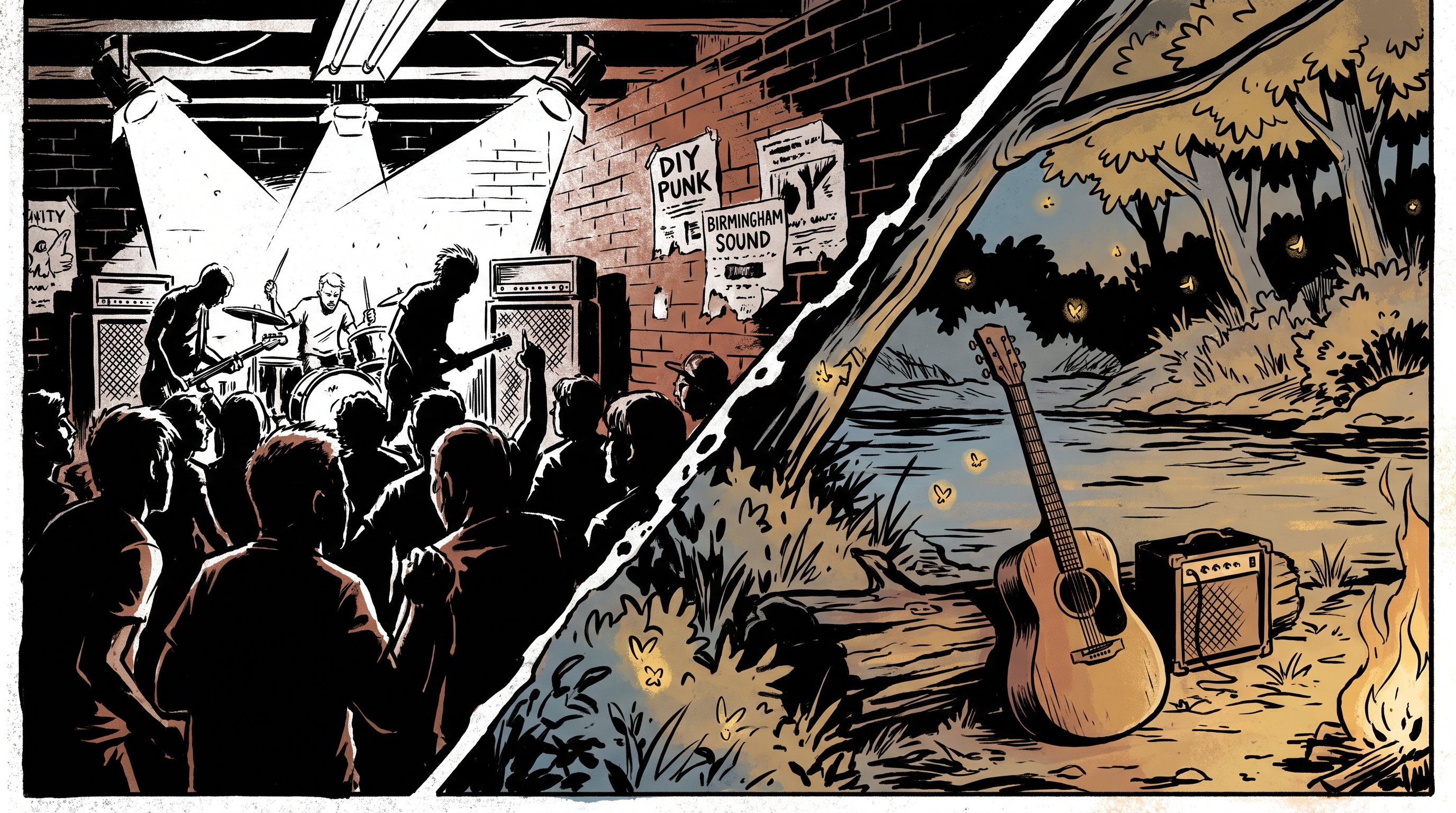
The funny thing about a good “country era” is that it can make people act like the artist got cleaned up, domesticated, or finally filed into the right record-store bin.
That misses what makes Waxahatchee interesting.
Katie Crutchfield’s recent records glow with pedal steel, open-road pacing, and the kind of melodic patience that fits next to modern Americana. But the nerve under it still feels like DIY punk: short lines that do not over-explain themselves, emotional directness without theatrical polish, and a sense that the song only works if it tells the truth before it gets pretty.
That is the punk DNA worth tracing here. Not volume. Not distortion. Not costume. The reflex.
P.S. Eliot Is Not Just Backstory
Before Waxahatchee became the name on Grammy-nominated roots-adjacent records, Crutchfield was part of P.S. Eliot, the Birmingham pop-punk band she formed with her twin sister Allison. The useful detail is not just that P.S. Eliot existed. It is that the band explains a lot about what survived the genre shift.
P.S. Eliot songs had that basement-show urgency where the hook feels like it was written because there was no time to dress it up. The Wikipedia summary is dry about it, calling P.S. Eliot a Birmingham pop punk band active before Katie started Waxahatchee and Allison started Swearin’. But even that little factual bridge matters: Waxahatchee did not appear out of nowhere as a tasteful singer-songwriter project. It came after a band that understood speed, bluntness, and the social electricity of small rooms.
That context changes how the quieter material lands. When Crutchfield slows down, it does not sound like retreat. It sounds like someone keeping the same pressure on the lyric while changing the room around it.
The Country Glow Does Not Sand Off the Edges
Tigers Blood is a great example because it is so easy to hear the surface first. The official Waxahatchee site frames the album as the current big chapter, complete with tour dates and a Grammy nomination note. Bandcamp presents it inside the Anti- Records universe, where the packaging can make the whole thing feel clean, established, and grown-up.
But listen past the polish and the old DIY economy is still there. Crutchfield does not write like she is trying to impress the back row. She writes like she is trying to catch the exact temperature of a feeling before it changes. That is a punk habit as much as a folk habit: get in, say the thing, leave the bruise visible.
The arrangements may have more room now, but they do not feel lazy. The restraint is active. It gives the voice space to carry the same unvarnished force that used to cut through fuzz and cymbals.
Punk Lineage Is About Behavior
This is why I like the “punk DNA” lens more than arguing about whether something is punk enough.
Genres are useful until they turn into border patrol. Lineage is more interesting. What behaviors made the trip? What instincts survived after the amp settings changed? In Waxahatchee’s case, the answer seems pretty clear: direct address, emotional risk, no patience for fake mystery, and a stubborn belief that a song should feel lived-in instead of focus-grouped.
That is also why the Americana turn works. Country and folk music can be brutally honest when they are healthy, but they can also get trapped in tasteful performance. Waxahatchee dodges that trap because the songs still feel like they came from a person who learned to value immediacy before polish.
The twang is not a costume over punk bones. It is another way to expose them.
The Basement Is Still in the Creek Water
The name Waxahatchee points back to Waxahatchee Creek in Alabama, and that origin story can make the project feel rooted in place before genre. I like that image: creek water, humid air, old houses, a guitar part that sounds sunburned around the edges.
But underneath that Southern geography, you can still hear the basement circuit. The small-room discipline. The do-it-yourself scale. The refusal to make the feeling more polite than it is.
That is the sweet spot for this whole lane of music writing: not “punk band goes country” as a gimmick, but artists who carry punk’s useful habits into places where they are not supposed to be the headline. Waxahatchee does not need to sound like P.S. Eliot to be connected to it. The connection is in the songwriting metabolism.
Sometimes the loudest punk move is not staying loud forever. Sometimes it is learning how little decoration a song needs before it starts telling on you.
Who else belongs in this punk-to-Americana lineage: the artists who changed the sound but kept the basement-show nerve?
Got thoughts? Hit me up on Bluesky.
Sources: