Frank Turner Keeps Proving Punk Ages Best Around a Campfire
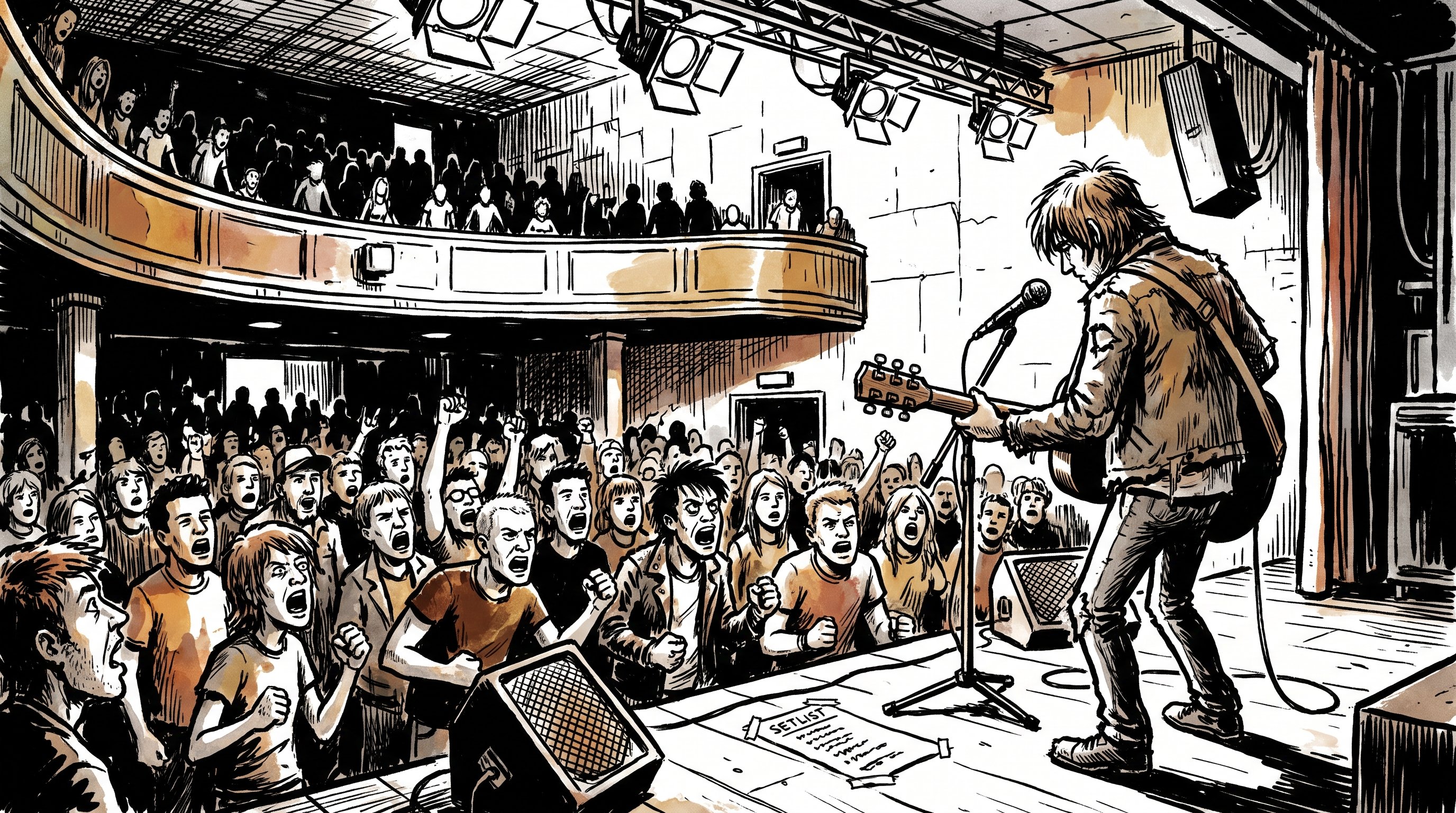
One of my favorite punk-adjacent tricks is watching the music get older without getting respectable.
A lot of artists mellow out by sanding off the parts that made them urgent in the first place. They trade force for polish, edge for tasteful craft, and before long the whole thing starts feeling like a museum tour of a former personality.
Frank Turner has somehow spent two decades dodging that fate.
The reason the phrase Campfire Punkrock still hits is that it never sounded like branding fluff. It sounded like a mission statement. Back in the wake of Million Dead, Turner took the raw insistence of punk and shoved it into songs that could survive with just an acoustic guitar, a room full of people, and enough conviction to make the chorus communal. Twenty years later, that idea still feels weirdly radical.
The Punk Part Was Never Just About Volume
Americana UK’s recent interview is a good reminder that Turner himself sees Campfire Punkrock as both identity and argument. The piece notes how his solo writing moved from youthful uncertainty into songs about memory, identity, and survival, but the key thing is that he does not treat the quieter format like a retreat. He even says his last couple of records leaned more self-consciously punk again, noisier and more band-driven, while the anniversary solo run helped him reconnect with the original spark.
That is the part I love.
He is not telling some corny story about “outgrowing” punk. He is saying the form can stretch. A solo set does not have to mean softness. Acoustic does not automatically mean fragile. Rowdy songs can still be rowdy when the electricity disappears.
That feels truer to punk than a lot of supposedly harder music.
Portable Community Might Be the Real Genre
The AU Review got at another angle I keep coming back to: durability. Turner is still out there building long tours, crossing fanbases, and treating community like an active practice instead of a nostalgic memory. Their interview ties the current run to his dream-come-true tour with Descendents, which is such a perfect lineage marker. You can hear the whole chain in that sentence: old-school punk urgency, modern singalong catharsis, and the stubborn belief that this stuff is supposed to be lived in, not archived.
What keeps Turner interesting to me is that he has figured out how to make punk portable.
Not portable in the lame lifestyle-brand sense. Portable in the sense that the songs can move between club shows, festival slots, solo gigs, and giant crowd choruses without losing their center. If folk music is partly about songs belonging to people, Turner has spent years making punk songs that behave that way too.
That crossover matters more as scenes get older. Not everybody wants the same pit at 45 that they wanted at 19. But plenty of people still want the honesty, the release, the directness, and the feeling that everybody in the room is briefly on the same side.
Growing Older Without Going Soft Is a Real Skill
Louder’s review of the final London date on the Campfire Punkrock Twenty run makes the whole thing sound less like a nostalgia package and more like proof of concept. The write-up frames the show as a celebration of “twenty years of punk rock honesty,” and that phrase nails it. Honesty is really the throughline here.
Not purity. Not scene-policing. Not pretending every song has to sound like it was tracked in a squat with a broken snare.
Honesty.
That is what lets Turner move between solo intimacy and full-band charge without seeming fake. The songs still come from the same place. They still want participation. They still want a crowd to answer back.
Maybe that is why Campfire Punkrock has held up better than so many genre mashup labels. It describes an actual social function. It is punk that can survive outside the punk room, punk that can travel light, punk that invites more people to yell the chorus without diluting the feeling.
And honestly, that might be one of the healthiest ways for punk DNA to keep spreading: not by becoming safer, but by becoming harder to contain.
What punk-rooted artist do you think has figured out how to age without losing the spark?
Got thoughts? Hit me up on Bluesky.
Sources: