Cities Keep Writing E-Bike Laws for an E-Moto Problem
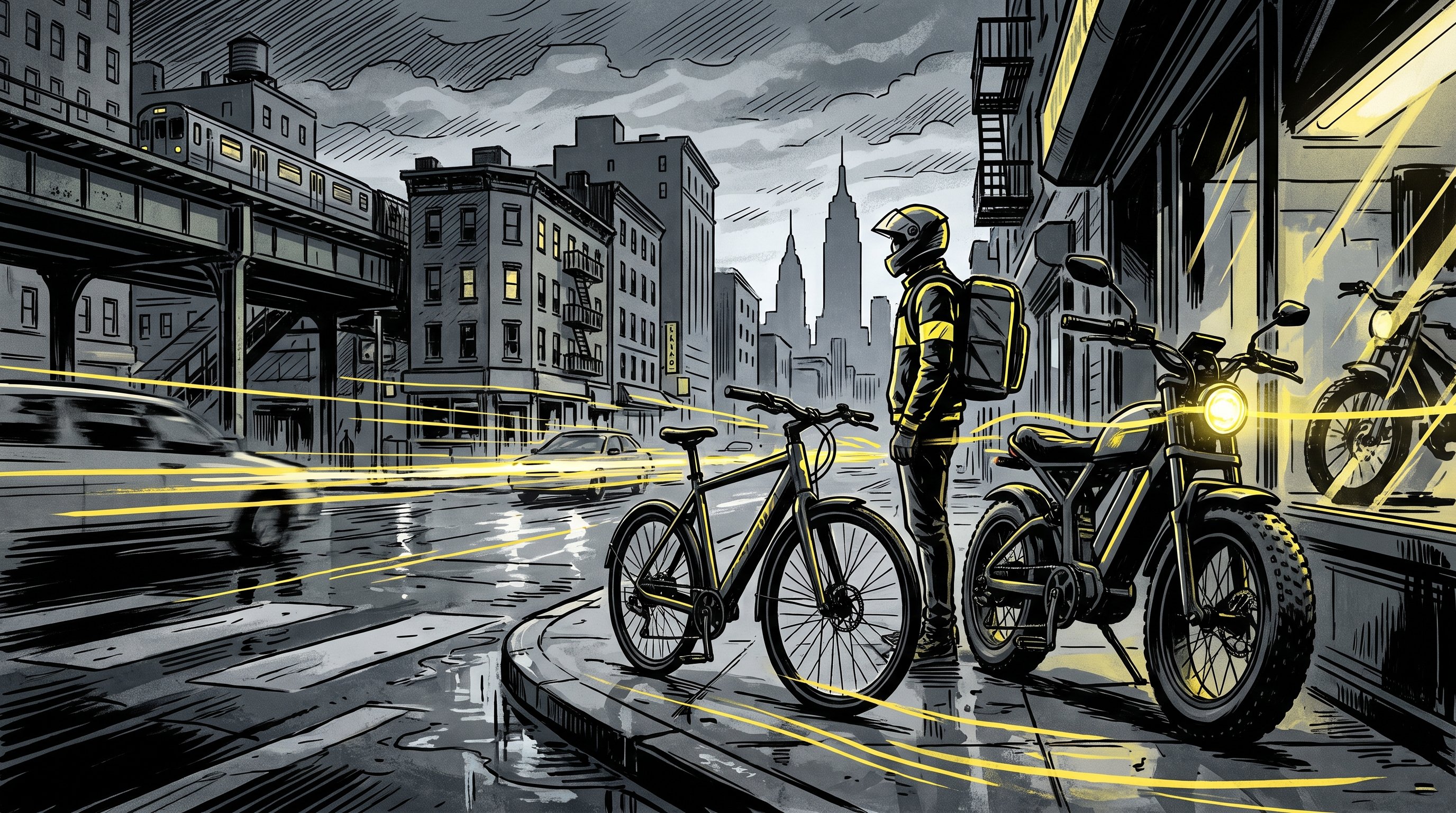
One of the most annoying things happening in micromobility right now is that a very real problem keeps getting described with the wrong word.
There absolutely is a problem. High-speed electric motorcycles keep getting sold as if they are ordinary e-bikes. Some of them blow past the legal limits that define an actual e-bike. Some are marketed to teenagers. Some are sold with the kind of vague, slippery language that makes parents, riders, and even lawmakers think they are just buying a spicier bicycle.
That part is serious.
But when cities respond by piling new restrictions onto normal e-bikes, they end up solving the wrong problem and making the useful stuff harder to live with.
The Mess Starts With Category Fraud
The sharpest recent piece on this came from Streetsblog USA, which argued that lawmakers are aiming at illegal e-motos but hitting legal e-bikes instead. The examples are grim. After several fatal crashes involving high-speed electric vehicles marketed as e-bikes, the article points to manufacturers advertising machines capable of 30, 40, or even 50 miles per hour with language that blurs the line between bicycle and motorcycle.
That distinction matters more than a lot of people seem willing to admit.
A legal e-bike is not just “anything with pedals and a battery.” In most places, legal e-bikes live inside a specific class system with speed and power limits. The weird limbo machines being pushed online are often something else entirely: effectively electric mopeds or motorcycles wearing bicycle cosplay.
If that sounds snarky, good. The marketing deserves it.
New York Is Showing How Fast the Conversation Can Drift
This week, New York City lawmakers unveiled a sprawling package of bills around e-bikes, e-scooters, and related vehicles. Electrek’s summary describes proposals that would ban currently legal Class 3 e-bikes, add new obligations for delivery platforms, increase penalties, and tighten enforcement around illegal higher-powered vehicles masquerading as bicycles.
Some of that is understandable. New York has had several high-profile crashes, and nobody wants to shrug off real injuries or deaths.
But the details matter.
Streetsblog New York reported that City Council leadership is also looking admiringly at New Jersey’s new licensing, registration, and insurance rules for e-bikes. That is exactly the sort of move that sounds “serious” in a press conference and gets messy the second it lands on actual riders. The New York reporting notes concerns from disabled riders, insurance access problems, and the broader risk of treating ordinary e-bike users like they are the same as people riding illegal high-speed machines.
That is the trap.
The more the public conversation collapses everything into a single scary blob called “e-bikes,” the easier it becomes to regulate the wrong end of the market.
The Useful Vehicle Is Not the Same as the Reckless One
What bugs me is that legal e-bikes are one of the most practical pieces of transportation tech we have. They help commuters flatten bad hills, let more people arrive at work without needing a shower, and make delivery work less brutal. They are not a novelty anymore. They are infrastructure-adjacent machines used by actual adults trying to get somewhere.
So when policymakers respond to illegal e-motos by threatening the legal class system, they are not just tightening safety. They are creating drag on one of the few mobility tools that consistently makes city life easier.
Even the New York bill package seems to reveal this confusion. Electrek notes that many proposals are really aimed at illegal mopeds and overpowered devices, while Streetsblog’s reporting shows how quickly that broader anger spills over into calls for licensing every e-bike rider anyway.
That is a bad trade.
If a company is falsely selling a 46 mph machine as an e-bike, go after the company. If a vehicle exceeds e-bike limits, classify it honestly. If apps are pushing unsafe delivery conditions, regulate the apps. If street design is dangerous, fix the street.
But do not pretend that a normal pedal-assist commuter bike and an electric motorcycle with decorative pedals are the same thing just because the headline writers got lazy.
The Better Fix Is Boring, Specific Enforcement
The answer here is not glamorous. It is definitions, enforcement, and honesty.
Crack down on deceptive marketing. Stop illegal imports at the point of sale. Make retailers disclose top speed and class clearly. Enforce existing rules against vehicles that are already outside the e-bike category. Build infrastructure that separates vulnerable riders from cars instead of acting like paperwork alone creates safety.
That approach is less emotionally satisfying than announcing a giant crackdown on “e-bikes.” It is also more likely to work.
The most frustrating version of this story would be lawmakers finally waking up to a genuine e-moto problem, then using that wake-up call to make ordinary low-speed micromobility more bureaucratic, more expensive, and less accessible.
That would not be safety. That would just be category failure with better branding.
If cities are going to get serious about micromobility, can they learn to distinguish an actual e-bike from an electric motorcycle with pedals bolted on?
Got thoughts? Hit me up on Bluesky.
Sources: