Kava Bars Are Starting to Look Like College-Town Third Places
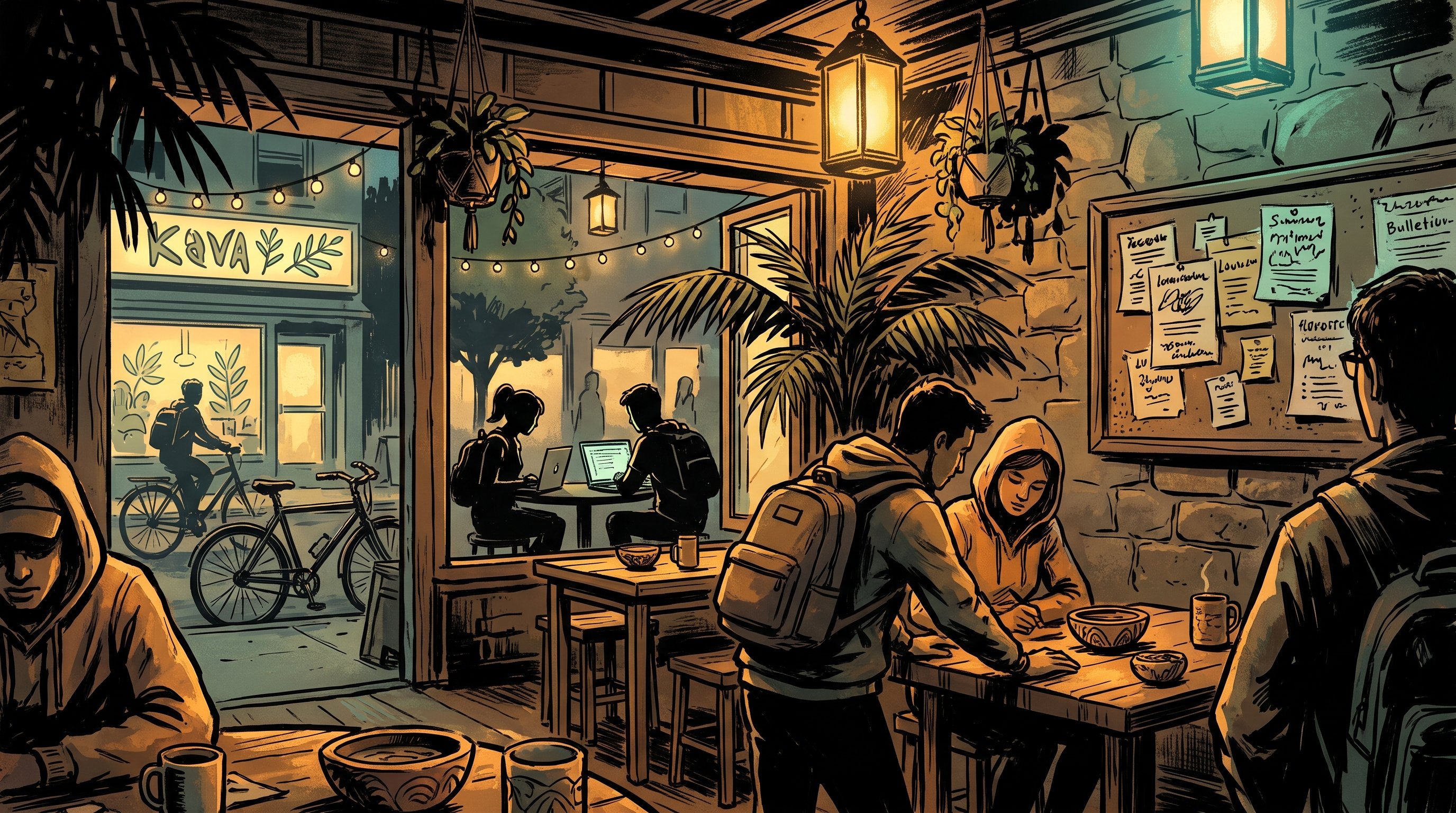
A few years ago, a kava bar opening in a new city still felt like a curiosity story.
Now it’s starting to feel like infrastructure.
What jumped out at me looking across this year’s coverage is that the pitch has gotten more specific. These places are not just selling an exotic plant drink or chasing a vague wellness trend. They keep showing up in stories about recovery, late-night hangouts, downtown foot traffic, and the basic human need for somewhere to be that isn’t built around alcohol.
The New Angle Is Less Tiki Fantasy and More Practical Third Space
That shift is all over the headlines.
WRAL’s June report on kava popping up around North Carolina pairs the trend with a note of caution about the science still catching up. That matters, and the scene should be honest about it. But the bigger cultural signal is that kava is no longer being treated like a fringe beach-town oddity. It is showing up often enough in a growing state market that a mainstream local outlet is asking what this means and whether the public understands what it is.
Then you get the more grounded local stories. MLive reported on a no-alcohol bar opening in downtown Ann Arbor. The Independent Florida Alligator described a new Gainesville kava shop as a third space for sober late nights. BoiseDev covered a second location for a non-alcoholic kava bar, explicitly tying the expansion to the owner’s recovery story.
Put those together and the pattern gets clearer: kava bars are getting legible to regular people because they solve a regular problem.
The Problem They Solve Is Simple
A lot of cities have plenty of places to drink and plenty of places to buy coffee, but not many places built for hanging out after dark if you want something calmer than a bar and less transactional than a cafe trying to close by 6.
That gap is bigger than it sounds.
For students, sober-curious people, folks in recovery, night owls, and anybody who wants company without booze, the usual options are weirdly thin. So when a Gainesville story frames a kava shop as a third space, that lands. When an Ann Arbor story frames an opening around the absence of alcohol, that lands too. These are not marketing buzzwords. They are clues about demand.
The recovery angle matters especially because it gives the whole category a stronger social purpose than “here’s a trendy drink.” If the Boise expansion is being driven by an owner’s recovery experience, that says something important about how these spaces are positioning themselves: less escapist fantasy, more usable community.
That Doesn’t Mean the Scene Is Fully Grown Up Yet
None of this means the category is settled.
The WRAL piece is a useful reminder that the science and public understanding are still uneven. Regulation could get weirder. Bad operators could muddy the waters. And plenty of kava bars still lean too hard on vague counterculture aesthetics instead of giving newcomers a clear reason to walk in.
But the best current openings seem to be moving away from that fuzziness. They are easier to explain to your friend, your partner, your coworker, or your parent. They are alcohol-free hangouts. They stay open late. They offer a social ritual that is not just getting hammered. In a lonely, overstimulated culture, that is a real proposition.
The Smart Kava Bars Will Build for Belonging, Not Just Novelty
If I were betting on what lasts, it would not be the spots trying to feel mysterious. It would be the ones that understand their job is to become part of a city’s everyday social map.
That means comfortable seating, real hospitality, events that do not feel forced, menus that make sense to first-timers, and a vibe that says you can stay awhile without performing a lifestyle identity. The category does not need more mythology nearly as much as it needs more places that feel genuinely useful.
And that is why this recent cluster of stories feels important. Ann Arbor, Gainesville, Boise, and the broader North Carolina trend all point toward the same thing: kava bars are at their strongest when they stop selling intrigue and start building belonging.
If your town got a new kava bar tomorrow, would you want it to feel more like a lounge, a late-night cafe, or a community living room?
Got thoughts? Hit me up on Bluesky.
Sources:
- A new buzz: Kava pops up around NC and why experts say there needs to be more research - WRAL
- Bar with no alcohol to open in downtown Ann Arbor - MLive.com
- New Gainesville kava shop offers third space for sober late nights - The Independent Florida Alligator
- Non-alcoholic kava bar expands with second location, inspired by owner’s recovery - BoiseDev