Kava Goes Corporate: How Franchises Are Bringing the Shell to the Suburbs
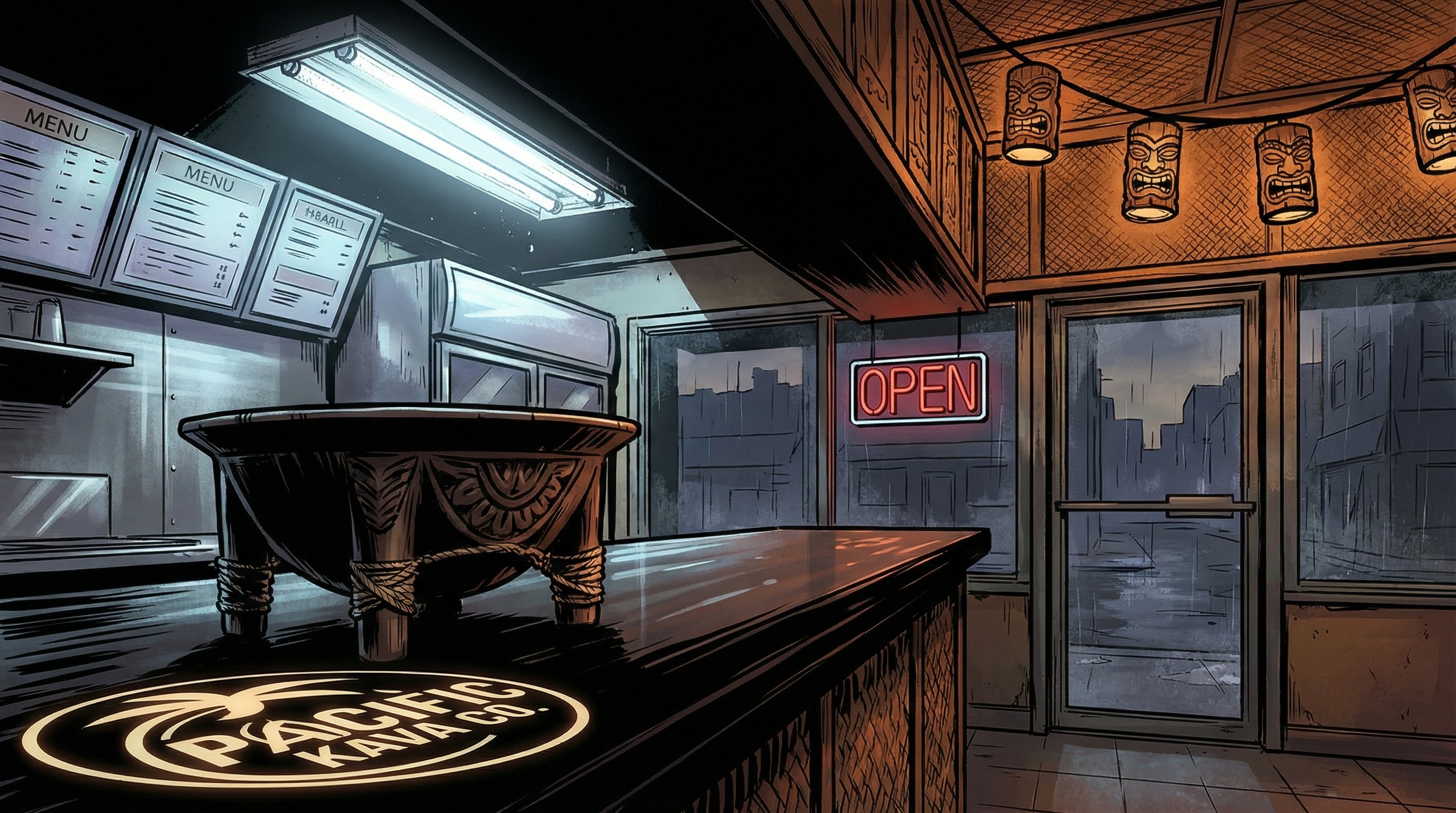
In 2011, there were 20 kava bars in the entire United States. Today? Over 300, with franchises racing to plant flags in suburban strip malls from Ohio to Texas. What was once an underground scene of Pacific Island traditionalists and Florida locals has become a genuine business opportunity—complete with franchise fees, royalty structures, and expansion roadmaps.
The question isn’t whether kava is going mainstream. It already has.
The Numbers Don’t Lie
Kava Culture, arguably the most aggressive player in the space, has grown from zero to 23 locations across four states in just five years. Florida accounts for 17 of those spots—nearly 74% of their footprint—but Texas, Ohio, and Michigan are catching up fast. The franchise model requires a total investment between $150,500 and $409,000, with an average gross revenue of $470,804 per location.
Those margins matter. Traditional bars and restaurants struggle with razor-thin profits, but kava bars enjoy above-average net profit margins thanks to lower overhead and intensely loyal customer bases. When your clientele shows up because they’re not drinking alcohol, they tend to stick around.
From Shell to Suburb
What’s fascinating about this expansion isn’t just the scale—it’s the where. New locations are popping up near universities (Auburn Hills is targeting Oakland University’s 20,000-student population), in trendy urban districts (Jacksonville’s King Street development), and in suburban gathering spots (Frisco’s Rail District, complete with rooftop patio).
Ray and Ruselle Hass, franchise co-owners of the new Frisco location, opened their doors on January 16th. The grand opening celebration is scheduled for early February on that rooftop. Meanwhile, Detroit Kava Bar is building out a spot designed to feel “more study lounge than party scene”—a deliberate choice to meet students where they actually want to be.
This isn’t your grandfather’s tiki bar. These are functional spaces designed for the sober curious: people who want social environments without the social pressure to drink.
The Sober Curious Engine
The timing is everything. Thirty percent of millennials are actively reducing alcohol consumption. Half of kava consumers report improved mental clarity compared to their drinking days. And the cultural shift away from binge drinking toward “mindful consumption” has created a gap that kava bars are filling.
“The new social norm is being sober in social environments,” one regular told Supramood. It’s a sentiment echoing across Gen Z and millennial circles, where choosing not to drink no longer marks you as boring—it marks you as intentional.
Kava’s appeal is simple: it works on the brain’s limbic system (the same neural circuitry alcohol targets) but without impairing motor skills or decision-making. You get presence without the hangover. Connection without regret.
The Roll-Up Strategy
Beyond franchising, bigger moves are happening. Branded Legacy recently acquired Pau Hana Kava Bar in West Melbourne, Florida, generating over $125,000 in Q3 revenue. Their 2026 strategy? Open three to five new Florida locations while pursuing “additional acquisitions of profitable kava bars.”
This is classic roll-up territory: acquire independent locations, centralize sourcing and branding, extract operational efficiencies, and scale. It’s the playbook that built Starbucks and Chipotle. Whether that’s good or bad for kava culture depends on how you feel about efficiency versus authenticity.
What Does This Mean for the Scene?
Here’s the thing: franchises aren’t inherently evil. They bring accessibility—that Auburn Hills location near Oakland University means 20,000 students who might never have driven to a hole-in-the-wall kava spot can now walk to one between classes. The Frisco rooftop creates a social space where young professionals can gather without defaulting to happy hour drinking.
But something gets lost when every kava bar starts looking the same. The hand-carved shells, the weird hours, the guy behind the counter who’s been drinking the stuff since he lived in Fiji—that energy is harder to franchise.
The best-case scenario? Franchises introduce people to kava, and those people eventually seek out the independent spots for the deeper culture. The worst case? We get a sea of identical “Kava Culture” locations that feel more like Starbucks than anything Pacific Islanders would recognize.
Either way, the genie’s out of the bottle. Kava has gone corporate.
Have you been to a franchised kava spot? How does it compare to the indie scene? Drop your thoughts in the comments or hit me up on socials.
Sources:
- Kava Culture Franchise Analysis – Franzy
- Kava and the Rise of Sobriety Movements – Supramood
- Growing Franchise Kava Culture Embraces ‘Sober Curious’ Trend – Franchise Times
- Kava Culture Kava Bar Grand Opening in Frisco – Community Impact
- New Auburn Hills Kava Bar – Hoodline
- Branded Legacy Expands Kava Bars – Newsramp