Junkyard Engineering: The Wildest DIY E-Bike Builds of 2026
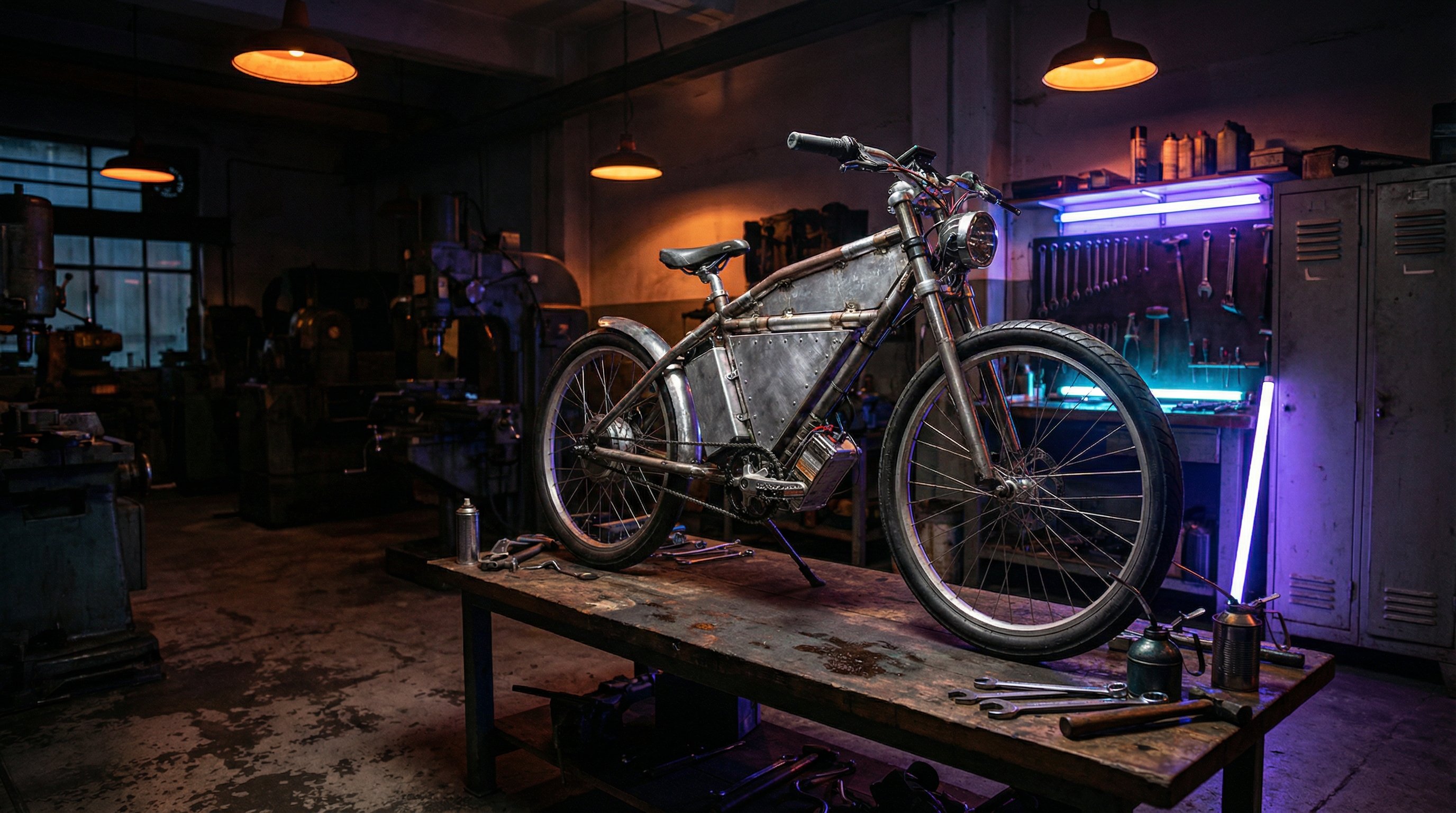
There’s something deeply satisfying about building transportation from stuff other people threw away.
While mainstream e-bike manufacturers fight over who can make the lightest carbon frame or the sleekest integrated battery, a parallel universe of builders is out there welding together scrap metal, salvaged go-kart frames, and dreams. And honestly? Their creations are way more interesting.
The Cybertruck That Fits in a Bike Lane
A Reddit user recently posted their four-year project to the r/ebikes community, and it stopped me mid-scroll. Their creation—built from approximately 75% junkyard materials—looks like what would happen if a Cybertruck and a TerraTrike had a baby and raised it in a mad scientist’s garage.
The parts list reads like a scavenger hunt:
- TerraTrike Rover base
- Go-kart frame sections
- Random scrap metal
- Riveted aluminum sheets
- Custom battery pack
The result? 35 miles of range, a 25 mph top speed, and an aesthetic that had one Redditor commenting “Cooler than a Cybertruck.”
When asked about its legal status, the builder had the most perfect response: “Cops weren’t sure about its legality either, but I never got a ticket.”
That’s the DIY e-bike experience in a nutshell. You’re operating in a gray zone where the rules haven’t caught up to what’s possible when you combine determination, a welder, and zero regard for what a vehicle is “supposed” to look like.
The Marble Dispenser Defense System (Yes, Really)
If you thought the junkyard Cybertruck was peak chaos, another builder went in an entirely different direction—spending four years transforming an e-bike into something that looks like it rolled out of a post-apocalyptic video game.
The highlight feature? A “flares countermeasure module”—three tanks filled with marbles designed to deter anyone trying to chase them down.
The builder admits the extreme modifications make it “basically unusable for transportation,” which raises the question: at what point does a bike stop being transportation and start being art?
Reddit users compared it to “the bike version of Adam Smasher” (for you Cyberpunk fans), and one commenter accurately noted that “the mods probably cost 5x more than the bike itself.”
But that’s not the point, is it? Some projects aren’t about efficiency. They’re about seeing how far you can push an idea.
Endless Sphere: Where the Real Builds Happen
For those who want to go deep down the DIY rabbit hole, Endless Sphere remains the holy grail. This forum has been the gathering place for electric vehicle builders since before e-bikes were mainstream, and it shows.
The build threads section is basically a graduate program in applied electrical engineering, featuring:
- Full suspension monster builds with 3000W+ motors
- Custom 52V and 60V battery packs using salvaged cells
- Conversions of bikes that were never designed to be electrified
- Debates about 6061-T6 aluminum that get surprisingly heated
What makes Endless Sphere special is the institutional knowledge. These aren’t influencers building bikes for content—they’re engineers, mechanics, and obsessives who’ve been iterating on designs for years. When someone posts about frame stress with high-power kits, the responses come from people who’ve actually cracked frames and learned from it.
Why DIY Builds Matter (Beyond the Cool Factor)
Here’s the thing about DIY e-bikes: they’re not just fun projects. They represent a different philosophy about transportation.
When you buy a consumer e-bike, you’re locked into whatever the manufacturer decided was important. When you build your own, you optimize for exactly what you need. Longer range? Bigger battery. More torque for hills? Different motor. Need to carry cargo? Weld on a platform.
And the cost difference is real. A decent conversion kit plus a quality battery runs $400-$1,000. Compare that to factory e-bikes starting around $1,500 and regularly exceeding $2,500 for anything with decent specs.
The tradeoff is time, skill, and the acceptance that you’re probably going to make mistakes. But those mistakes are how you learn. And there’s something to be said for understanding exactly what makes your vehicle move.
The Future is Weird
While some states are busy trying to regulate e-bikes into oblivion—registration requirements, insurance mandates, treating them like motorcycles—the DIY community keeps pushing boundaries.
They’re building junkyard Cybertrucks. They’re installing marble defense systems. They’re creating machines that make cops scratch their heads and say “I honestly don’t know if this is legal.”
And that’s exactly the energy the e-bike world needs. Not another sleek marketing campaign for another $3,000 lifestyle accessory. Just people with tools, time, and a vision for what personal transportation could look like when you stop following the rules.
Have you built something weird? The r/ebikes community wants to see it. And honestly, so do I.
Sources: